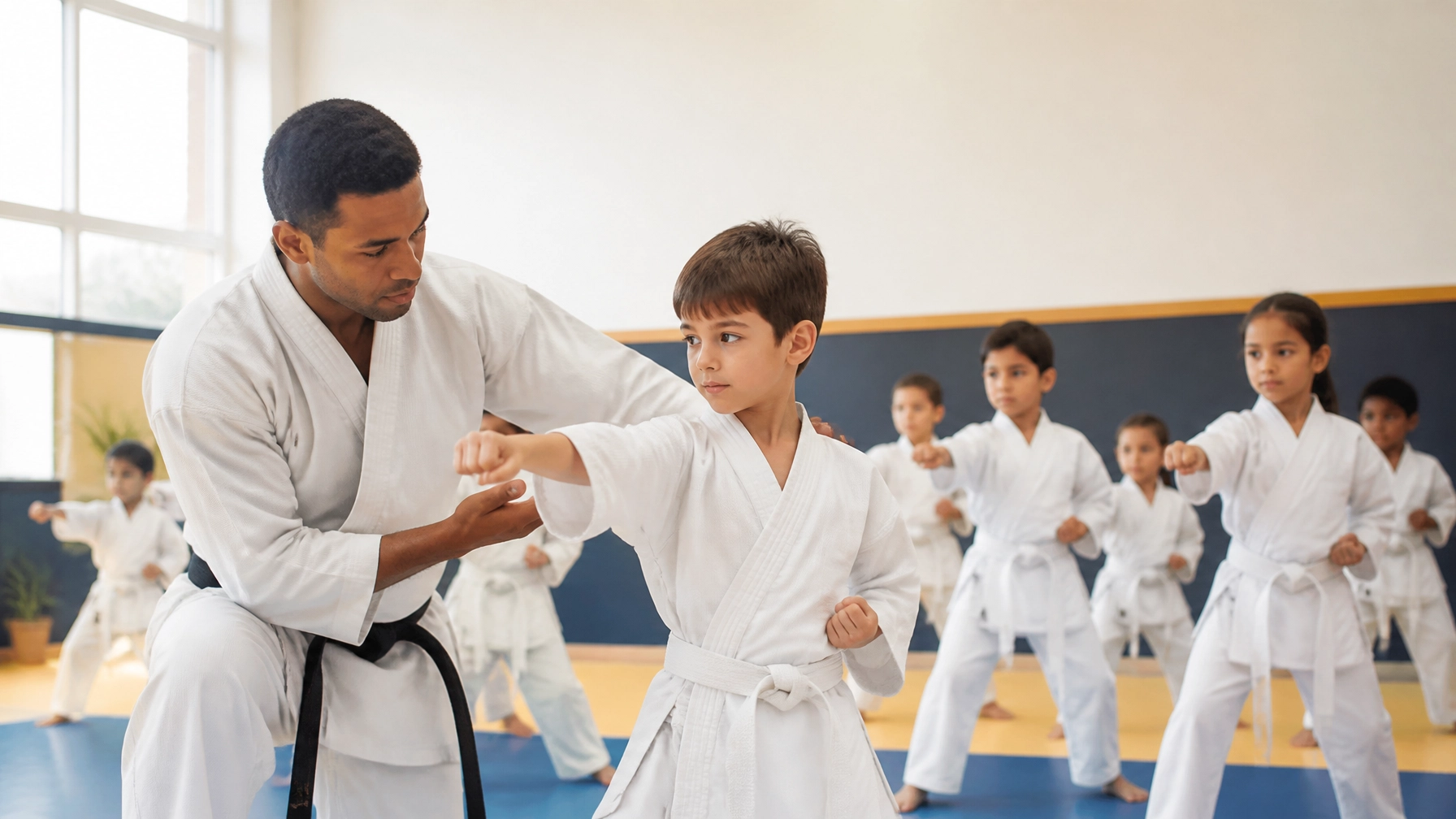
Autism & Martial Arts: A Parent’s Guide to What to Look For
Choosing an activity for your child can feel like a big decision: especially when you are looking for a place that understands autism, respects individual differences, and creates genuine opportunities for success.
Martial arts can be a positive, empowering activity for many children on the autism spectrum. The right program offers more than exercise or self-defense. It can provide structure, movement, achievable goals, and a welcoming community where a child is encouraged to grow at their own pace.
However, not every martial arts class is designed with inclusion in mind. The most important question is not simply, “Does this school offer martial arts for children with special needs?” It is:
Will this program adapt to my child while recognizing and celebrating who they are and what they can do?
This guide can help you know what to look for.
How Martial Arts Can Support an Autistic Child
Every child is different. Autism is a spectrum, and children may have different communication styles, sensory needs, motor abilities, interests, and goals. Martial arts should never be presented as a treatment or cure for autism. Instead, it can be an enjoyable activity that supports physical development, confidence, focus, and connection.
1. Predictable structure and routine
Many martial arts classes follow a consistent format: students enter, line up, warm up, practice skills, participate in drills, and finish with a cool-down or closing routine.
That predictability can make a new activity feel more manageable. When children know what to expect, they may be better prepared to participate and transition between activities. Repeated routines can also give students time to become familiar with instructions, movements, and class expectations.
A structured environment does not mean every child must do everything in exactly the same way. A strong instructor keeps the overall routine consistent while adapting the details for each student.
2. Physical movement that supports regulation
Martial arts involve purposeful movement, balance, coordination, and body awareness. Students may practice stances, blocks, punches, kicks, forms, and footwork: always with instruction appropriate to their age and ability.
Physical activity can be a valuable part of a child’s overall well-being. Research on adapted martial arts and structured exercise has reported promising improvements in areas such as balance, motor skills, social interaction, and emotional responses. The evidence is still developing, and results vary from child to child, but it reinforces the value of making inclusive physical activities available.
For some children, movement provides a helpful way to engage their bodies and attention. For others, the class may need to begin slowly, with breaks or adjustments based on sensory needs.
3. Goal-setting through belt ranks
Martial arts often break learning into small steps. Students work toward new skills, stripes, belt ranks, or personal milestones.
This progression can help a child experience success without needing to compare themselves with others. A goal might be learning a new stance, following a two-step direction, participating in the warm-up, or completing part of a form.
The goal is not to rush a child through the belt system. It is to make progress visible and meaningful. Each achievement can reinforce the message: “I can learn. I can practice. I can improve.”
4. Confidence and self-esteem
Children often build confidence when they are given realistic challenges, patient instruction, and opportunities to demonstrate what they have learned.
For a child who has struggled in traditional team sports or group activities, an adaptive martial arts class may offer a different experience. Students can practice individually, participate alongside peers, and receive encouragement based on effort and progress.
Confidence may show up in many ways: entering the class more comfortably, trying something new, asking for help, completing a sequence, or recovering after a mistake. These small moments matter.
5. Social connection in a lower-pressure setting
Martial arts provide natural opportunities for social learning without requiring constant conversation or complicated team strategy. Children may practice taking turns, greeting instructors, following shared rules, observing a peer, or working with a partner.
The interaction is connected to a clear activity, which can make social participation feel more comfortable. A child does not have to be the fastest, loudest, or most outgoing student to belong.
6. A safe place to practice focus and self-control
Martial arts teach students to listen, pause, follow directions, control their movements, and use physical skills responsibly. These lessons are taught through repetition and practice rather than expectation alone.
A supportive instructor understands that focus and self-control develop over time. If a child becomes overwhelmed or needs a break, the response should be calm, respectful, and safety-focused: not shaming or punitive.

What to Look for in an Inclusive Martial Arts Program
A truly inclusive program is more than a standard class with a child with autism added to the roster. Look for a school whose teaching philosophy, instructor behavior, and community culture demonstrate genuine flexibility.
Instructors who tailor instruction
Ask whether instructors adapt techniques, explanations, and expectations to each student’s abilities and learning style.
Some children learn best by watching a demonstration. Others benefit from short verbal instructions, visual cues, repetition, or extra time to process what they have heard. A qualified instructor should be willing to try different approaches rather than assuming one method works for everyone.
You can ask:
- How do you adapt instruction for autistic students?
- How do you support different communication styles?
- Can you modify an activity if a child is not ready for partner work or contact?
- What happens if a student needs additional time to process a direction?
A philosophy of celebrating what a child can do
Pay attention to the language instructors use. Do they focus only on limitations, or do they notice strengths and potential?
A positive program celebrates what a child can do while encouraging them to try new things when they are ready. That may mean modifying a movement, changing the goal, offering a break, or recognizing participation as an achievement.
One Changing Lives Martial Arts parent described CLMA classes as:
“A model for the inclusion of differently abled children : a place where students are celebrated for what they CAN do.”
That philosophy is central to meaningful inclusion.
Small, achievable steps and positive reinforcement
Children should not be expected to master an entire sequence immediately. Look for instructors who break skills into manageable parts and use specific encouragement, such as:
- “You kept your balance.”
- “You listened for the next direction.”
- “You tried that movement again.”
- “You stayed with it even when it was difficult.”
Positive reinforcement should recognize effort, progress, and participation: not just technical perfection.
Patience with repetition and individual pacing
Repetition is a normal part of martial arts training, and it can be especially helpful for students who benefit from practicing a skill several times. At the same time, children may not all need the same number of repetitions or the same amount of time.
Ask how the school handles differences in pace. A supportive instructor should be patient without making a child feel behind.
A supportive community rather than a competitive one
Competition is not the only measure of martial arts success. For many families, the most important outcomes are confidence, fitness, focus, belonging, and personal growth.
Visit the school and observe how students treat one another. Are differences respected? Do instructors encourage students to help each other? Does the environment feel welcoming, or does it seem focused primarily on winning and performance?
Communication with parents
Parents know their children best. A quality program should be willing to listen to information about communication preferences, sensory sensitivities, transitions, interests, and strategies that work at home or school.
This does not mean a parent must provide a lengthy explanation before their child can participate. It means the school should create an open line of communication and be willing to adjust as the child’s needs and goals become clearer.
What Sets Changing Lives Martial Arts Apart?
At Changing Lives Martial Arts, we believe martial arts should be accessible to people of all ages and abilities.
Our programs are designed around personalized instruction and are adapted to each student’s unique abilities and goals. This includes inclusive programming for individuals with special needs, including children on the autism spectrum.
Led by LainaLee Rambow, our team is actively involved with each student. Instructors focus on more than physical technique. They help students develop discipline, confidence, focus, resilience, and a strong sense of self.
Our student-centered approach means we encourage children to try new things while respecting their individual pace. We want students to feel supported: not singled out: and to know that their progress matters.
Changing Lives Martial Arts serves families in Virginia Beach and Chesapeake at our Holland and Greenbrier locations. Our community is built on respect, encouragement, and connection. Many families describe the academy as a place where students are welcomed as family.
Our commitment to community education and development has also been recognized through the Go2 Karate BEST Business Award.

Practical Tips for Parents
Before enrolling, take time to learn how the program works and whether it feels like a good fit.
1. Call ahead and start a conversation
Tell the instructor that your child is autistic or has specific support needs. You can share only the information you are comfortable sharing, but helpful details may include:
- How your child communicates
- Sensory sensitivities or triggers
- What helps during transitions
- Whether your child is comfortable with physical contact
- Interests that may help motivate participation
- Any safety considerations
Ask about the instructor’s experience working with autistic children and individuals with special needs.
2. Ask about class structure and sensory needs
Find out what a typical class looks like. Ask:
- How long is each class?
- How are transitions handled?
- Is the class size manageable?
- Is loud music or frequent shouting part of the environment?
- Can a child take a break if they become overwhelmed?
- How are partner activities and physical contact introduced?
A school that welcomes these questions is more likely to take your child’s experience seriously.
3. Schedule a visit or trial
A visit can tell you more than a website description. Watch how instructors interact with students and how the class responds when someone needs extra support.
Changing Lives Martial Arts offers an opportunity to explore training through our 2 Weeks FREE online special, making it easier for families to take the next step and see whether the program feels right. Contact the school for current details and availability.
4. Choose a manageable starting point
The best starting class is the one your child can realistically tolerate and enjoy. Consider the time of day, class size, length of the session, and your child’s energy level.
It is perfectly reasonable to begin with small goals. Attending part of a class, learning one movement, or becoming comfortable in the space can be a meaningful first step.
The Right Program Starts With Respect
Martial arts can give children on the autism spectrum a place to move, practice, connect, and grow. But the quality of the experience depends on the environment around them.
Look for instructors who adapt. Look for patient progressions, positive reinforcement, open communication, and a community that values belonging over comparison.
Most importantly, look for a program that sees your child as a whole person: with strengths, interests, abilities, and potential.
To learn more about inclusive martial arts training in Virginia Beach and Chesapeake, contact Changing Lives Martial Arts or call/text 757-797-6004.