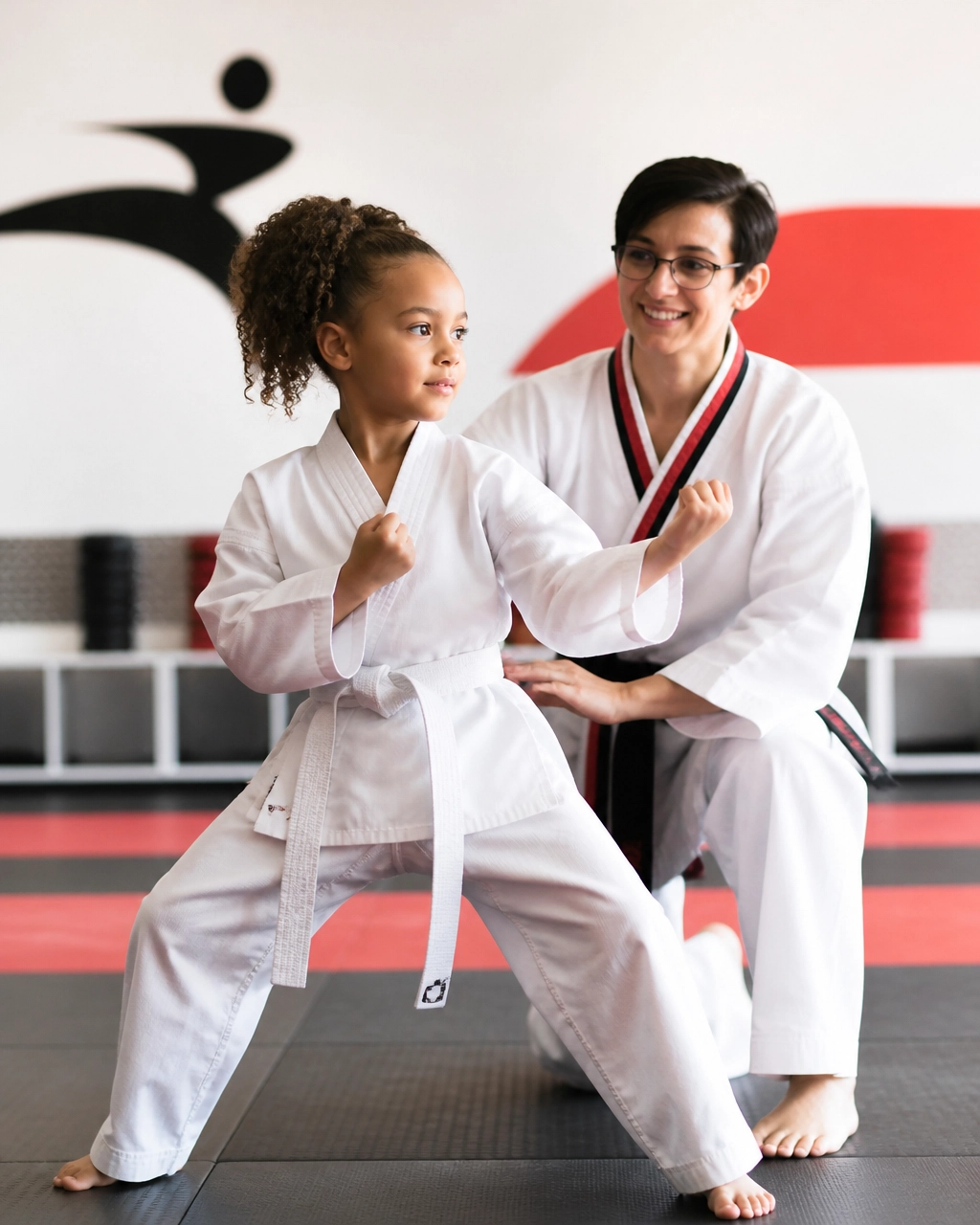
Is Kids’ Karate Bad for Fidgety Kids? The Truth About ADHD and Focus
If your child fidgets, interrupts, struggles to wait, or seems to have endless energy, you may wonder whether karate is a good idea: or whether it could make things worse.
The short answer is no: kids’ karate is not inherently bad for fidgety children or children with ADHD. In the right environment, martial arts can give children a positive way to move, practice self-control, follow directions, and experience success.
Karate is not a cure for ADHD, and it should never replace guidance from your child’s doctor, therapist, or school support team. However, a structured and encouraging program can complement the strategies your family already uses.
At Changing Lives Martial Arts, our Karate for Kids program focuses on more than kicks and punches. We help children develop discipline, confidence, respect, focus, and resilience in a supportive community serving families in Virginia Beach and Chesapeake.
The myth: “Hyperactive kids need to avoid martial arts”
This concern usually comes from the idea that martial arts are too intense, too competitive, or too focused on fighting. Parents may worry that a child who already struggles with impulse control will become more aggressive or overstimulated.
In a well-run children’s program, the opposite is the goal.
Traditional kids’ karate is built around:
- Listening for instructions
- Starting and stopping on command
- Practicing one movement at a time
- Waiting for a turn
- Following safety rules
- Repeating skills until they improve
- Showing respect to instructors and classmates
The purpose is not to encourage children to fight. It is to teach them how to manage their bodies and choices. Students learn that martial arts skills require control, awareness, and responsibility.
For a fidgety child, that structure can be easier to understand than a loosely organized activity. Instead of being told simply to “sit still,” a child may be given a specific action: stand in ready position, watch the demonstration, repeat the technique, and listen for the next command.
That gives energy a direction.
Why karate can be a good fit for children with ADHD
Every child is different, and no activity works perfectly for everyone. Still, several features of karate may support children who have attention, hyperactivity, or impulse-control challenges.
1. Movement helps children engage
Many children focus better when their bodies are active. Sitting at a desk for a long period can be difficult, but physical movement combined with mental instructions creates a different kind of challenge.
Karate asks children to coordinate:
- What they hear
- What they see
- How their body moves
- When they should begin
- When they should stop
This combination of physical and mental engagement may help a child become more present in the moment.
It also gives children an appropriate place to use their energy. They can run, jump, block, kick, balance, and practice combinations while learning that movement must remain controlled and safe.

2. Instructions are broken into manageable steps
A long, complicated instruction can overwhelm any child: especially one who has difficulty sustaining attention. Karate techniques are usually taught in smaller pieces.
An instructor may demonstrate one stance or movement, let students practice it, and then gradually add the next step. Repetition helps children understand what comes next and builds confidence as the skill becomes familiar.
This approach aligns with guidance from Understood, which highlights the value of breaking routines into chunks and teaching children gradually.
A child does not have to master everything in one class. Progress happens one skill, one practice session, and one goal at a time.
3. Karate creates regular opportunities to practice self-control
Focus is not a switch that children can simply turn on. It is a skill that develops through practice.
In class, children may practice self-control by:
- Holding a stance for a few seconds
- Keeping their hands to themselves
- Waiting while another student practices
- Stopping when the instructor gives a command
- Trying again after making a mistake
- Staying with a challenging exercise
These moments may seem small, but they are meaningful repetitions of behaviors children also need at home and at school.
The goal is not to shame a child for fidgeting. The goal is to help the child notice their body, respond to a clear cue, and return to the task.
What does the research say?
Research on exercise and martial arts is encouraging, but it is important to describe it honestly.
A 2023 paper available through the National Library of Medicine examined a 12-week judo program involving children with ADHD and children born very preterm. The results did not show a significant improvement in response inhibition for the ADHD group in that particular study.
That does not mean martial arts are harmful or that karate cannot benefit an individual child. It does mean parents should be cautious about promises that martial arts alone will eliminate ADHD symptoms.
Other research and expert summaries suggest that structured physical activity may support areas such as attention, executive function, coordination, confidence, and self-regulation. Results can vary depending on the child, the instructor, the class environment, the activity’s complexity, and how well the program is adapted to individual needs.
The most accurate takeaway is this:
Karate can be a valuable complement to a child’s overall support plan, but it is not a replacement for professional ADHD care.
How Changing Lives Martial Arts supports focus and discipline
At Changing Lives Martial Arts, we recognize that children do not all learn in the same way or at the same pace. Our approach emphasizes personalized instruction and a positive environment where students are encouraged to build on their strengths.
Our Karate for Kids classes are designed to develop life skills alongside physical abilities, including respect, courtesy, self-control, confidence, and focus.
For a fidgety child, that can mean celebrating progress such as:
- Listening for a little longer than last time
- Completing a new combination
- Remembering a safety rule
- Waiting patiently for a turn
- Recovering after becoming frustrated
- Asking for help appropriately
- Returning attention to the instructor
These are meaningful accomplishments. A child does not need to be perfectly still or perfectly focused before beginning karate. In many cases, practice is how those skills grow.
What parents should look for in a karate program
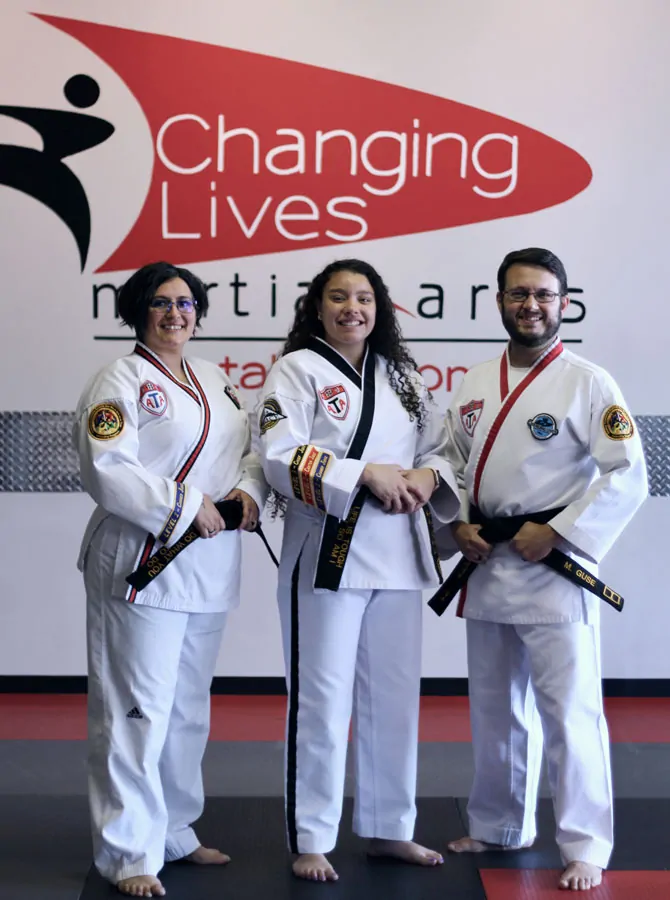
The quality and culture of the school matter more than the label of the martial art. Before enrolling, visit the academy and observe how instructors interact with students.
Look for a program that:
Uses clear, consistent expectations
Children benefit from knowing what will happen next and what behaviors are expected. A predictable class routine can make it easier to participate.
Corrects behavior without humiliation
Children with ADHD may already receive frequent criticism at school or in other activities. Instructors should set boundaries while treating students with dignity and encouraging improvement.
Values effort and progress
A child should not be defined by how quickly they learn a technique. Praise for effort, persistence, listening, and self-control can help build a healthier relationship with challenge.
Offers personalized support
Ask how the instructors respond when a child needs a movement repeated, a direction simplified, or a short reset. At Changing Lives Martial Arts, we believe programs should be tailored to each student’s needs and abilities.
Creates a welcoming community
Respect should go in every direction: from students to instructors and from instructors to students. Children are more likely to stay engaged when they feel safe, included, and valued.
Questions to ask before your child starts
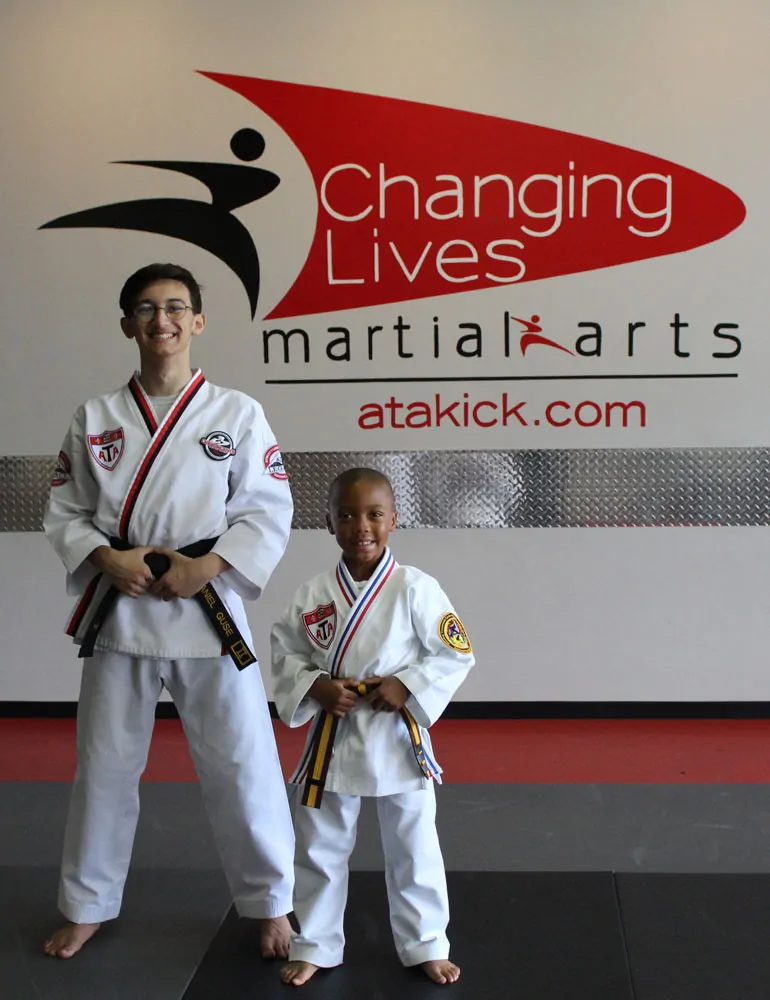
When you visit a karate school in Virginia Beach or Chesapeake, consider asking:
- How do you support children who have ADHD or attention challenges?
- What happens if my child becomes distracted during class?
- How do instructors reinforce positive behavior?
- Can the curriculum be adapted to my child’s abilities?
- What should we tell the instructor about our child before the first class?
- Is there an introductory lesson or evaluation?
It can also help to speak with your child’s healthcare provider or therapist, especially if your child has specific sensory, physical, or behavioral needs.
So, is karate bad for fidgety kids?
For most children, fidgeting is not a reason to rule out karate. It may simply mean your child needs an instructor who understands that focus develops gradually and that movement can be part of learning.
The right karate program can provide structure without taking away a child’s individuality. It can turn energy into purposeful movement, mistakes into practice opportunities, and small improvements into real confidence.
At Changing Lives Martial Arts, we welcome children of all abilities and work to create a supportive path for growth. If you are considering karate for your child in Virginia Beach or Chesapeake, learn more about our Karate for Kids program or contact Changing Lives Martial Arts to discuss whether our classes may be a good fit.
Your child does not have to arrive already focused, disciplined, or confident. Those are skills they can build: one class at a time.