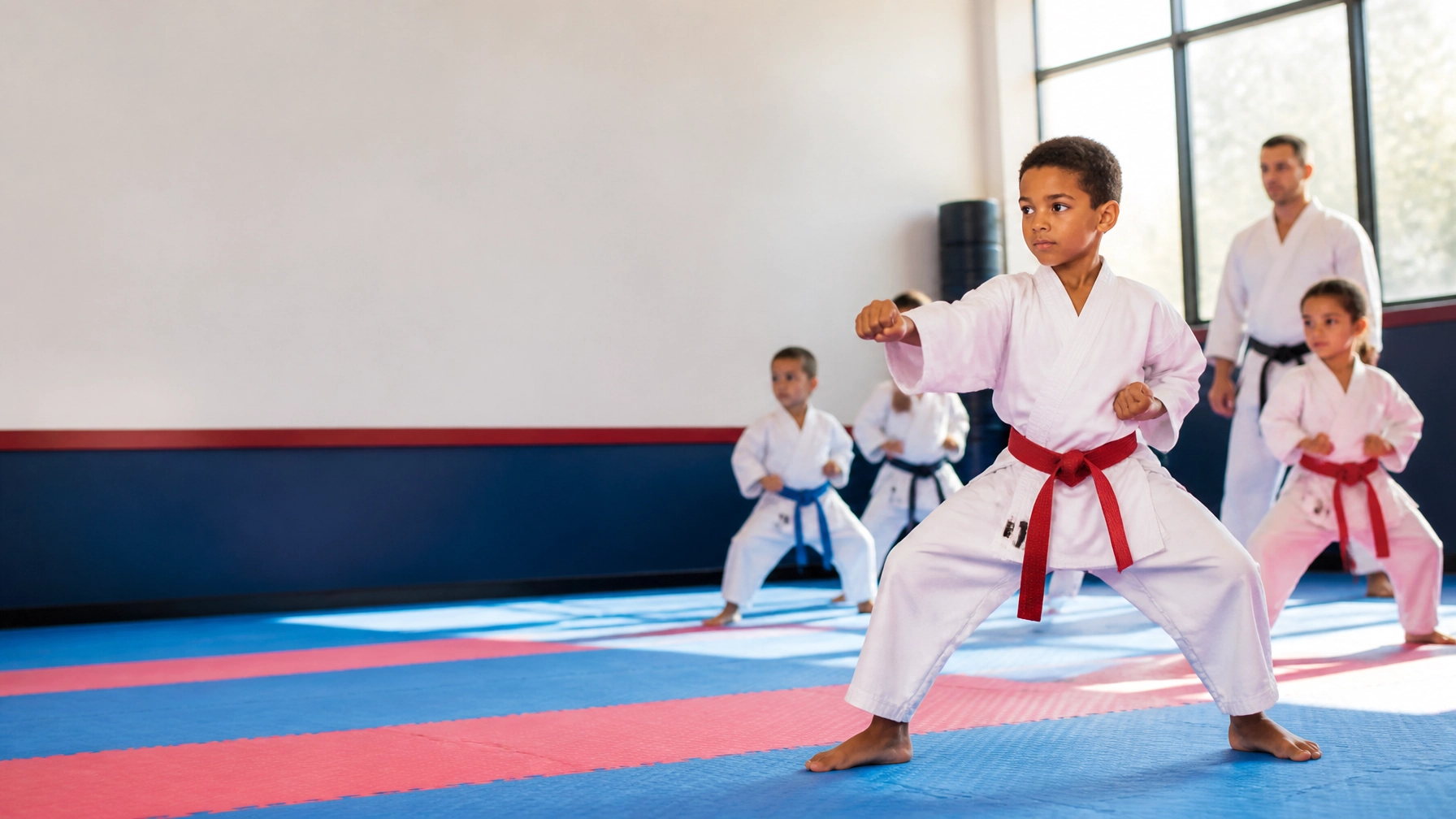
How Martial Arts Builds the Focus Your Kid Needs for Homework and Tests
Back-to-school season brings new routines, new expectations, and sometimes a familiar challenge: helping your child settle down, pay attention, and finish homework without constant reminders.
While martial arts may first catch a child’s attention because of the kicks, punches, belts, and physical activity, the benefits go much deeper. Structured karate and taekwondo training can help children practice the same habits they need in the classroom: listening carefully, following directions, managing impulses, staying with a difficult task, and working toward a long-term goal.
At Changing Lives Martial Arts, our Karate for Kids program is designed to develop more than physical skills. Students also build respect, self-control, discipline, confidence, focus, and resilience: qualities that can support them at home and at school.
Focus Is a Skill Children Can Practice
Some children seem naturally able to sit still and concentrate. Others need more opportunities to practice attention in a structured, encouraging environment.
Focus is not simply something a child either has or does not have. It is a skill that can develop over time. Just as children improve their balance or coordination through repetition, they can strengthen their ability to listen, remember instructions, and return their attention to the task in front of them.
That is one reason martial arts can be such a valuable part of a child’s back-to-school routine. Each class gives students repeated chances to:
- Listen for instructions
- Watch a demonstration
- Remember a sequence
- Practice with control
- Accept corrections
- Try again after making a mistake
- Remain engaged until the activity is complete
These small moments add up. Over time, children learn that concentration is something they can choose and improve.
1. Martial Arts Teaches Children to Listen and Follow Directions
A martial arts class typically follows a clear structure. Students enter the training area, prepare for class, listen to the instructor, practice techniques, and transition between activities.
Children must pay attention because each instruction matters. A small change in foot position, hand placement, timing, or direction can affect the technique. They learn to watch carefully rather than rushing ahead.
This same habit can help with schoolwork. A child who practices listening closely during class may become more comfortable with:
- Hearing multi-step instructions
- Asking questions when something is unclear
- Beginning assignments correctly
- Checking work before turning it in
- Following classroom routines
At Changing Lives Martial Arts, instruction is personalized to each student’s needs and abilities. That supportive approach gives children room to grow while still holding them to meaningful expectations.

2. Repetition Builds Attention Span and Working Memory
Karate and taekwondo training include repetition for a reason. Students may practice a stance, block, kick, combination, or form many times. Repetition helps techniques become more natural, but it also gives children practice sustaining attention.
As students learn longer combinations, they must hold several pieces of information in mind at once. They may need to remember what comes next, adjust their body position, and perform the movement at the right time.
This is closely related to working memory: the ability to hold information temporarily while using it. Working memory is important for everyday academic tasks such as:
- Remembering the steps in a math problem
- Holding a sentence in mind while writing
- Following a science experiment
- Reading and recalling key details
- Completing a multi-part homework assignment
A 2022 systematic review published in Children examined research on martial arts programs for children. The review found consistent benefits in physical fitness, coordination, balance, and other areas of development. Other research cited in that review has explored the relationship between martial arts, self-regulation, and cognitive development.
The evidence does not mean martial arts automatically raises every child’s grades. However, it does support the idea that regular, well-structured training can help develop physical and mental habits connected to learning.
3. Goal Setting Helps Children Develop Academic Persistence
School success rarely comes from getting everything right on the first try. Children need to learn how to continue when a subject is difficult, a project takes longer than expected, or a test does not go as planned.
Martial arts offers a visible way to understand progress. Students work toward new skills, stripes, belt levels, and other milestones. They see that improvement comes from consistent effort: not from being perfect immediately.
That lesson can transfer to homework and studying:
“I do not understand this yet, but I can keep practicing.”
A belt goal may take weeks or months to reach. During that time, students learn to:
- Show up consistently.
- Break a larger goal into smaller skills.
- Practice areas that need improvement.
- Listen to feedback.
- Notice progress over time.
- Try again after setbacks.
These are also effective academic habits. Preparing for a spelling test, completing a research project, or improving in a challenging subject requires the same patience and follow-through.
4. Self-Control Supports Better Homework Habits
Focus is not only about paying attention. It is also about managing distractions and impulses.
In a martial arts class, children learn that self-control matters. They may need to wait their turn, control the power behind a movement, maintain personal space, or stop when the instructor gives a signal. These expectations help children become more aware of their bodies and choices.
That awareness can be useful when it is time to do homework. A child may still feel tempted to check a device, get up repeatedly, or avoid a challenging assignment. But with practice, they can begin to recognize those impulses and redirect themselves.
Families can reinforce this connection by using simple language:
- “Let’s use your ready position before homework.”
- “Take one breath, then read the first direction.”
- “Homework is practice, just like your techniques.”
- “You do not have to finish everything at once. What is the next step?”
The goal is not to expect a child to sit motionless for hours. Children need movement, breaks, sleep, and age-appropriate expectations. Martial arts can be one helpful part of a broader routine that supports healthy learning.
5. Physical Activity Can Prepare the Brain for Learning
Children spend much of the school day sitting, listening, reading, and completing assignments. Regular physical activity gives them an important opportunity to move, release energy, and develop body awareness.
A martial arts class combines movement with concentration. Students are physically active while also listening, remembering, coordinating, and making decisions. The American Academy of Pediatrics explains that martial arts can support physical fitness, motor development, cognitive skills, stress reduction, and school performance when practiced appropriately.
A systematic review of martial arts research involving children also found improvements in areas such as cardiorespiratory fitness, speed, agility, strength, flexibility, coordination, and balance. These physical benefits can make it easier for children to participate confidently in school and other activities.
For many families, an after-school class also creates a positive transition between school and home. Instead of carrying restlessness or frustration directly into the homework routine, a child has a constructive outlet before settling down for the evening.

6. Calm Breathing and Confidence Can Help During Tests
Tests can be stressful, especially for children who worry about making mistakes or forgetting what they studied. Martial arts cannot eliminate test anxiety, but it can give children tools for responding to pressure.
A calm stance, controlled breathing, and a familiar routine can help a child pause before reacting. Students also learn that feeling challenged does not mean they are incapable. They can slow down, listen, and take the next step.
That mindset can be useful before a test:
- Sit comfortably.
- Take a slow breath.
- Read each direction carefully.
- Start with the question you understand.
- Return to difficult questions later.
- Remember that one test does not define you.
Confidence also matters. When children experience themselves improving in martial arts, they gain evidence that effort can create change. That confidence may encourage them to participate in class, ask for help, and approach difficult schoolwork with less fear.
Choosing a Martial Arts Program for Your Child
Not every program has the same goals or teaching style. When looking for a martial arts school in Virginia Beach or Chesapeake, consider whether the program:
- Emphasizes focus, respect, and self-control
- Provides age-appropriate instruction
- Uses positive, clear correction
- Welcomes different abilities and learning styles
- Offers individual attention
- Maintains a safe and supportive environment
- Focuses on personal growth: not just competition
At Changing Lives Martial Arts, we believe every student deserves the opportunity to grow. Our programs are tailored for children and families with different needs, goals, and experience levels. We also welcome individuals with special needs through an inclusive approach that focuses on what each student can do and how they can continue progressing.
You can learn more about our Karate for Kids classes and discover how martial arts training can support your child on and off the mat.
Start the School Year with Strong Habits
A successful school year is built one habit at a time. Listening carefully. Practicing consistently. Managing frustration. Finishing what you start. Taking a breath before reacting.
Martial arts gives children a positive environment to practice all of these skills while building fitness, confidence, and resilience. The goal is not to turn every child into a perfect student. It is to help them become more focused, capable, and willing to keep learning.
As your family prepares for a new school year in Virginia Beach or Chesapeake, consider giving your child an activity that supports both physical development and academic readiness.
Contact Changing Lives Martial Arts to get started and help your child enter the school year with confidence, focus, and momentum.